

E-Invoicing for Small Businesses in Germany: Rules for 2026
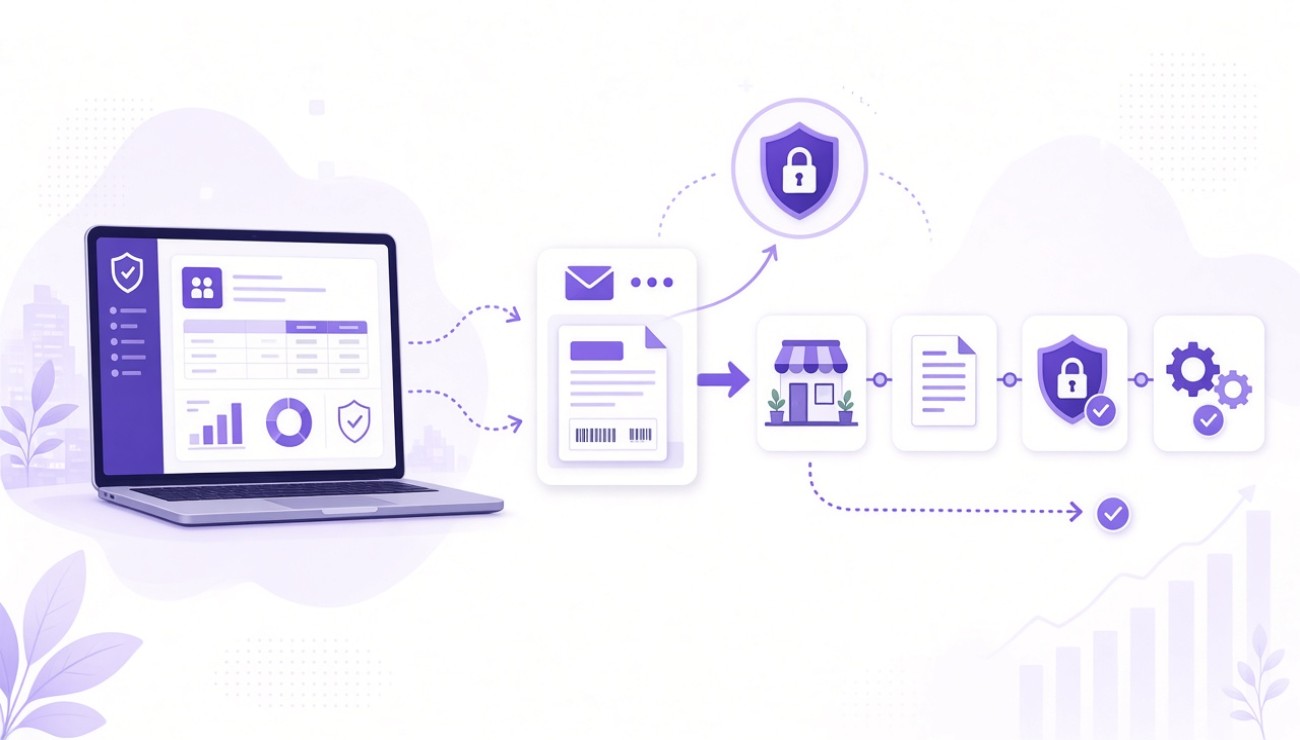
Since Germany introduced new e-invoicing rules, many small business owners have wondered whether they can continue sending invoices as PDFs or need to use a specific electronic format.
The answer depends on whether the business needs to receive an e-invoice or issue one. Germany has specific provisions for businesses using the small-business VAT scheme, known as the Kleinunternehmerregelung.
What is an e-invoice?
An e-invoice is an invoice issued in a structured electronic format that allows software to process its data automatically.
A regular PDF sent by email is generally not considered an e-invoice under the German VAT rules introduced on 1 January 2025.
Two common formats are:
-
XRechnung: a structured XML-based format.
-
ZUGFeRD: a hybrid format combining a readable PDF with structured XML data.
Do small businesses need to receive e-invoices?
Yes. Since 1 January 2025, businesses in Germany, including Kleinunternehmer, must be able to receive e-invoices.
An email inbox is generally sufficient to meet the basic receiving requirement. Special invoicing software is not legally required solely for receiving e-invoices.
In practice, however, businesses should be able to access, review and retain electronic invoices in their original format.
Do Kleinunternehmer have to issue e-invoices?
No. Businesses applying the small-business VAT exemption under Section 19 of the German VAT Act are exempt from the obligation to issue e-invoices.
They can continue issuing paper invoices, for example. PDF invoices can also be used when the applicable requirements for the chosen invoice format are met.
This exemption does not remove all invoicing obligations. Small businesses must still include the information required for their invoices.
What information should an invoice contain?
Simplified invoicing rules apply to Kleinunternehmer under Section 34a of the German VAT Implementation Regulation.
Required information generally includes:
-
the business owner's full name and address;
-
the invoice issue date;
-
customer information where legally required;
-
the quantity and type of goods or the nature and scope of services;
-
the total amount charged;
-
a clear reference to the small-business VAT exemption under Section 19 of the German VAT Act.
Additional information may be required depending on the transaction.
What does the small-business VAT scheme mean?
Kleinunternehmer apply a special VAT scheme under Section 19 of the German VAT Act. They generally do not charge VAT on their invoices under this scheme.
Instead, invoices should clearly indicate that the supply is covered by the small-business VAT exemption.
The scheme concerns VAT treatment. It does not mean that a business can stop issuing invoices or retaining incoming invoices where required.
What should small businesses do in 2026?
Even without an obligation to issue e-invoices, preparing for digital invoice exchange can be useful.
Practical steps include:
-
Make sure an email inbox is available to receive invoices.
-
Agree with business partners on the formats used for invoice exchange.
-
Retain incoming electronic invoices in their original format.
-
Check that issued invoices contain the required information.
-
Choose invoicing software that suits the business.
Create invoices and offers with Zefare
With Zefare, freelancers, self-employed professionals and small businesses can create digital invoices and offers.
The workflow is straightforward: enter customer details, add services or products and create the required document.
For businesses that need structured electronic invoices, Zefare supports XRechnung and ZUGFeRD.
The right features and formats depend on the business's circumstances and the requirements of its customers.
Conclusion: What are the rules for Kleinunternehmer?
In 2026, two principles are particularly important:
-
Receiving e-invoices: generally required since 1 January 2025.
-
Issuing e-invoices: no general obligation for businesses applying Section 19 of the German VAT Act.
The exemption does not remove the other applicable invoicing and record-retention requirements.
Organising invoicing processes early helps small businesses handle electronic invoices from their customers and suppliers more efficiently.