What Is an E-Invoice? A Simple Explanation
Invoices are part of everyday business. But as invoicing becomes increasingly digital, the way invoices are created, sent and processed is changing as well.
Terms such as e-invoice, XRechnung and ZUGFeRD are becoming increasingly common, especially for businesses operating in Germany.
But what exactly is an e-invoice? Is a PDF invoice already an e-invoice? And what should freelancers and small businesses know about electronic invoicing?
What is an e-invoice?
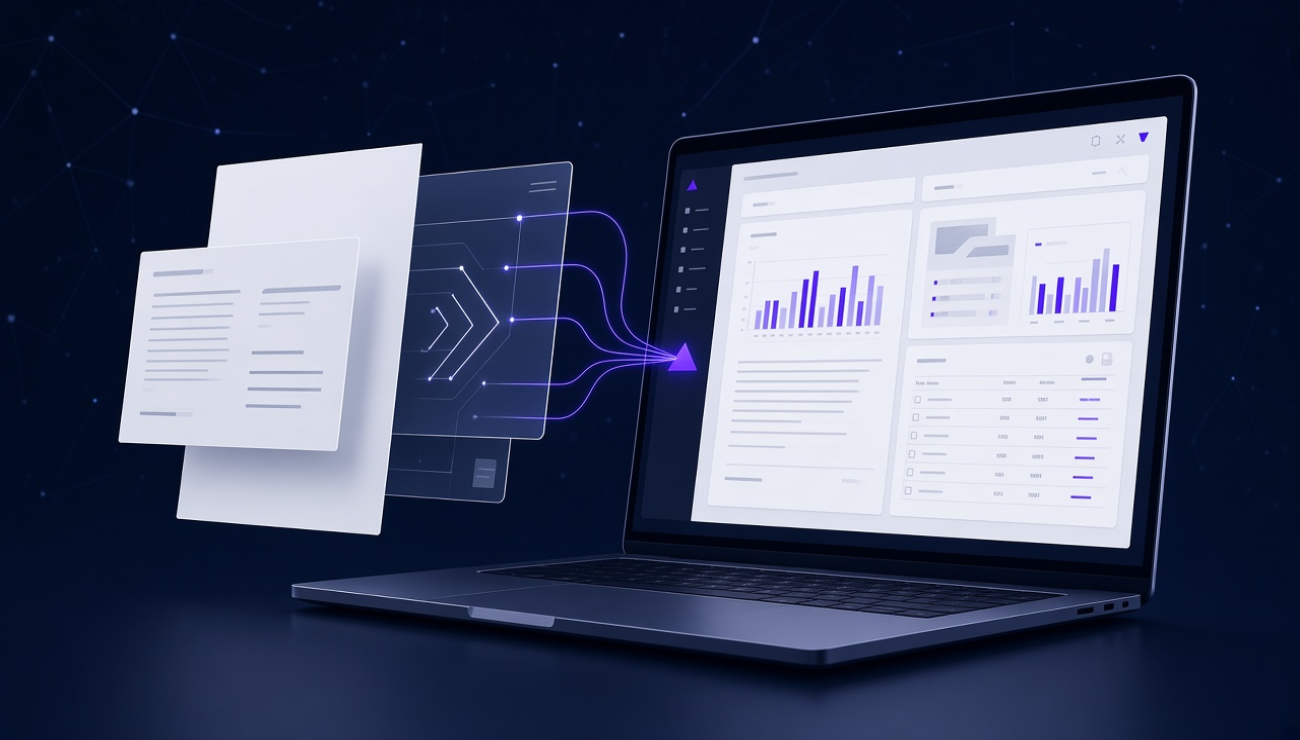
An e-invoice is an invoice in which the relevant information is provided in a structured electronic format.
This allows accounting software and other systems to automatically read and process the invoice data.
An e-invoice is therefore more than simply an invoice sent digitally.
The key difference is the structure of the data.
A traditional invoice may be created as a PDF and sent by email. Although the PDF is digital, its information is generally not structured in a way that allows accounting systems to process it automatically.
An e-invoice contains structured data that can be processed by suitable software.
Is a PDF invoice an e-invoice?
No. A standard PDF invoice is generally not considered an e-invoice under the German legal definition.
A PDF can certainly be sent electronically, for example by email. However, it is primarily a digital representation of the invoice.
An e-invoice, on the other hand, contains structured invoice data that can be processed automatically.
This is why formats such as XRechnung and ZUGFeRD are becoming increasingly important.
What is XRechnung?
XRechnung is a standardized format for electronic invoices. The invoice information is provided as structured XML data.
A pure XRechnung is not necessarily easy for a person to read. Its main advantage is that the data can be processed efficiently by software.
XRechnung is particularly important when invoicing public-sector organizations in Germany.
What is ZUGFeRD?
ZUGFeRD is another format for electronic invoices.
Unlike a pure XRechnung, ZUGFeRD combines a visual PDF representation with structured invoice data.
This means that the invoice can be read by a person while the structured data can also be processed automatically by suitable software.
For many businesses, this provides a practical way to combine a familiar invoice layout with structured electronic data.
Why are e-invoices becoming more important?
Electronic invoicing can make the exchange and processing of invoice information more efficient.
Structured invoice data can, for example, be transferred automatically into accounting or ERP systems. This can reduce manual data entry and simplify recurring administrative tasks.
For businesses, electronic invoicing can therefore offer several benefits:
- less manual data entry
- faster invoice processing
- fewer transcription errors
- easier digital archiving
- better integration with accounting and business software
What does the German e-invoice requirement mean?
Germany introduced new rules for electronic invoicing in the B2B sector from 2025.
It is important to distinguish between the ability to receive e-invoices and the requirement to issue them. Transitional rules also apply, meaning that not every business has to issue every invoice exclusively as an e-invoice immediately.
Businesses should therefore check which rules apply to their specific situation.
For freelancers and small businesses, understanding the new requirements early can make the transition much easier.
E-invoices for freelancers and small businesses
Even if a business only creates a few invoices each month, manual invoicing can take unnecessary time.
Entering customer information, adding services, assigning invoice numbers and payment details, generating the document and sending it to the customer all take time.
Digital invoicing software can simplify these steps and make invoice creation more efficient.
Create e-invoices online
With Zefare, freelancers, self-employed professionals and small businesses can create invoices and offers online.
In addition to standard PDF invoices, Zefare supports modern formats such as XRechnung and ZUGFeRD.
This makes it easier to manage invoices and offers digitally without having to maintain separate templates and manual processes for every document.
Conclusion
An e-invoice is more than a PDF sent by email. The key difference is the use of structured electronic invoice data, which allows the information to be processed automatically.
XRechnung and ZUGFeRD are two important formats for electronic invoicing in Germany.
For freelancers, self-employed professionals and small businesses, understanding electronic invoicing is becoming increasingly important.
The simpler invoicing becomes, the more time remains for the work that actually drives the business forward.