

Mandatory E-Invoicing in Germany: What Applies in 2026, 2027 and 2028?
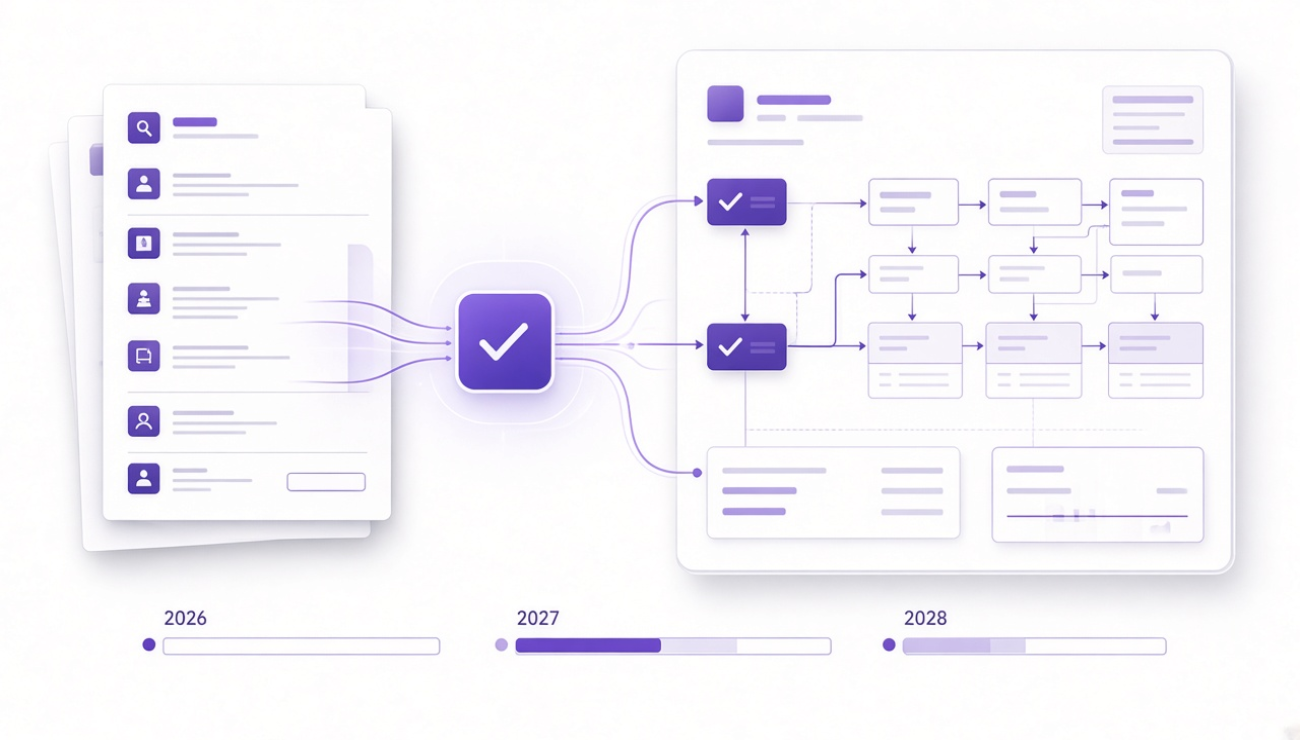
Electronic invoicing is no longer a future concept in Germany.
Since January 1, 2025, new rules have applied to invoices between domestic businesses. At the same time, transitional periods mean that not every business has to issue only e-invoices immediately.
So what applies in 2026? What changes in 2027? And what happens from 2028?
This article explains the most important deadlines.
What changed in 2025?
Since January 1, 2025, new rules have applied to electronic invoicing for domestic B2B transactions.
In principle, an e-invoice is now the standard for relevant transactions. However, transitional rules were introduced for the issuing of invoices.
It is important to distinguish between receiving and issuing e-invoices.
Since January 1, 2025, domestic businesses must generally be able to receive e-invoices. According to the German Federal Ministry of Finance, an email inbox is generally sufficient for receiving them.
The rules for issuing invoices are subject to transitional periods.
E-invoicing in 2026
In 2026, Germany is still in the transition phase.
Until December 31, 2026, businesses can generally continue using other types of invoices for relevant transactions under the transitional rules.
This can include paper invoices. A PDF invoice sent by email can also continue to be used if the recipient agrees to this format.
In other words:
E-invoicing is already part of the legal framework in 2026, but transitional rules still apply to issuing invoices.
For businesses, 2026 is therefore an important time to prepare their invoicing processes for the upcoming requirements.
E-invoicing in 2027
From January 1, 2027, the transitional rules become more limited.
Businesses whose total turnover in the previous calendar year was no more than €800,000 can continue using other invoice formats for transactions in 2027.
This additional transition period lasts until December 31, 2027.
For businesses above this turnover threshold, the relevant general transition period ends at the end of 2026.
This makes 2027 particularly important for smaller businesses.
E-invoicing from 2028
From January 1, 2028, these transitional rules for issuing invoices come to an end.
For relevant domestic B2B transactions, the e-invoice therefore becomes the standard requirement.
Businesses should not wait until the end of 2027 to prepare their invoicing processes.
Does mandatory e-invoicing apply to every invoice?
No.
The rules do not apply to every type of invoice.
In particular, B2C transactions, meaning invoices issued to private consumers, are not covered by the mandatory B2B e-invoicing rules.
Certain tax-exempt transactions and other legally defined situations are also excluded.
For example, small-value invoices of up to €250 can continue to be issued as other types of invoices. Additional exceptions also apply to certain specific situations.
Businesses should therefore check whether a specific transaction is actually covered by the mandatory e-invoicing rules.
What exactly is an e-invoice?
An e-invoice is not simply any invoice that is sent electronically.
A PDF invoice sent by email is generally not the same as a structured e-invoice under the German rules.
An e-invoice must in particular comply with the European EN 16931 standard and contain structured electronic invoice data that can be processed automatically.
Well-known formats include XRechnung and ZUGFeRD.
You can learn more in our related articles:
-
[What is XRechnung?]
-
[What is ZUGFeRD?]
-
[XRechnung or ZUGFeRD: What is the difference?]
Do businesses have to be able to receive e-invoices?
Yes.
This requirement has applied since January 1, 2025.
Domestic businesses generally have to be able to receive e-invoices. According to the German Federal Ministry of Finance, an email inbox is generally sufficient for receiving them.
This does not mean that every business had to issue every invoice as an e-invoice from 2025 onward.
The issuing requirements are subject to the transitional periods described above.
What should businesses prepare now?
Even when a transitional period still applies, preparing invoicing processes early can make the transition easier.
Businesses may want to:
-
choose suitable invoicing software;
-
make sure they can receive and store e-invoices;
-
support XRechnung or ZUGFeRD;
-
enter invoice data correctly;
-
validate electronic invoices;
-
review existing accounting processes;
-
train employees on the new workflows.
For small businesses in particular, starting early can make the transition more manageable.
E-invoicing with Zefare
With Zefare, freelancers, self-employed professionals and small businesses can create digital invoices and offers.
Zefare supports formats including XRechnung and ZUGFeRD, helping businesses prepare their electronic invoicing processes with one solution.
Conclusion
Germany is introducing mandatory e-invoicing in stages.
2026: The general transition period for issuing invoices runs until the end of 2026.
2027: Businesses with previous-year turnover of up to €800,000 can use the extended transition period until the end of 2027.
2028: The transitional rules for issuing invoices come to an end.
Regardless of these deadlines, domestic businesses have generally been required to be able to receive e-invoices since 2025.
Preparing invoicing processes early allows businesses to make the transition step by step rather than waiting until the final deadline.